
HazCom and Emergency Action Plan
Listen to this training
Work safely with chemicals
Hazard Communication, or HazCom, means knowing what’s in the container, what can harm you, and how to protect yourself.
Before you use a chemical
- Identify the product. Read its label and warning symbols.
- Find its Safety Data Sheet (SDS). Match the product name or ID on the label to the sheet.
- Check the sheet for hazards and safe handling instructions. Check what ventilation and personal protective equipment (PPE) you need.
- Ask your supervisor about anything you do not understand.
- Do not start until you have the information, equipment, and training needed for that product and task.
At Modesto, the SDS books are in the break area. The chemical list is at the front. At each jobsite, keep an SDS available for every chemical you use. Your supervisor will show you where to find the sheets and how to get them on any shift.
What a label tells you
Look for the product name or ID, the supplier, and warning symbols. Read the signal word, such as Danger or Warning. Read what can harm you and what to do to protect yourself.
Common warning symbols
- Flame: a fire-related hazard, such as a flammable product.
- Gas cylinder: gas under pressure.
- Corrosion: serious skin or eye damage, or corrosion of metals.
- Skull and crossbones: severe acute toxicity.
- Health-hazard silhouette: serious health hazards identified on that product’s label.
- Exclamation mark: hazards such as irritation or harmful acute effects.
- Flame over a circle: an oxidizer that can intensify a fire.
- Exploding bomb: an explosion-related hazard.
Read the words next to the symbol. They explain the hazard and how to protect yourself.
Keep labels readable. Report missing or damaged labels. If you can’t tell what’s in a container, stop and ask your supervisor. Label any container you pour a product into before you store it or leave it for someone else. Ask your supervisor if a container for immediate use needs a label.
Safety Data Sheets (SDS)
| Question | SDS section |
|---|---|
| What is the product, and who supplied it? | 1 — Identification |
| What can harm me? | 2 — Hazard identification |
| What first aid applies to an exposure? | 4 — First-aid measures |
| What are the fire or spill precautions? | 5 and 6 |
| How do I handle and store it? | 7 — Handling and storage |
| What ventilation and PPE do I need? | 8 — Exposure controls / personal protection |
| What materials or conditions must I avoid? | 10 — Stability and reactivity |
Check the sheet for the product you’re using. Gloves, respirators, and cleanup methods can vary by product.
Spills, exposure, and unusual work
- Stop work and warn nearby people when there is a spill, leak, strong unexplained odor, or suspected exposure.
- Move away from the hazard. Keep others out of the affected area.
- Notify your supervisor. Call 911 for a fire, serious injury, or other emergency.
- Follow the product’s SDS and emergency instructions. Give responders the product name and SDS when safely available.
- Do not enter a contaminated area or attempt cleanup unless you are trained, authorized, and equipped for that situation.
- Before an unfamiliar task, ask your supervisor what can harm you, how to protect yourself, and what to do in an emergency.
- Receive additional training before working with a new chemical hazard.
What to do in an emergency
At a customer jobsite, follow that site’s emergency plan.
Know where to go
Locate your primary exit, an alternate exit, the posted evacuation map, the alarm device, fire extinguishers, and the assembly area.
Jamin Barton, Safety Manager, is responsible for the Emergency Action Plan, headcount, and shutdown decisions. For questions about the plan, call (209) 496-3667.
Call 911 in an emergency. Don’t wait to reach a manager first.
Ask your supervisor to show you how to report an emergency and how to recognize the alarm.
When evacuation is required
- Alert others and activate the alarm when safe and applicable.
- Call 911 when safe. Give the address, emergency type, and known hazards.
- Leave calmly by a safe exit. Use an alternate route if the usual route is blocked.
- Leave belongings behind. Do not delay your exit to finish work or retrieve paperwork.
- Help visitors and people who need assistance only when you can do so safely.
- Go directly to the designated assembly area.
- Report to the person taking headcount. Report missing people and their last known location.
- Stay available for instructions. Do not leave the assembly area without telling the person taking headcount.
- Do not re-enter until emergency responders or the authorized incident lead give clearance. For a fire or explosion, follow the fire department’s clearance.
At Modesto, meet on the front lawn. If you can’t use it safely, go to the safe area your supervisor directs you to. Keep emergency vehicle access clear.
Do not go back inside to search for a missing person. Tell responders where the person was last seen.
Shutdown and response duties
When you need to evacuate, leave right away. Only the person trained and assigned to shut down equipment or utilities does that work, and only when it is safe.
Help with rescue, first aid, firefighting, or spill response only within your training and assigned duties.
Specific situations
- Fire or explosion: raise the alarm, call 911, evacuate, and report for headcount.
- Earthquake: drop, cover, and hold on during shaking. Stay away from falling materials. After shaking stops, evacuate when directed or when damage makes it necessary and a safe route is available.
- Chemical release: move away, warn others, notify your supervisor, and follow emergency instructions. Do not cross a spill or vapor area to reach a familiar exit.
- Bomb threat or suspicious item: do not touch the item. Notify police and the Safety Manager. Follow evacuation instructions.
- Violent threat: move away from danger when safe, call 911 when safe, and follow police instructions. Do not use an assembly area that would expose you to the threat.
Barton’s written Emergency Action Plan
Barton Emergency Action Plan, January 2026
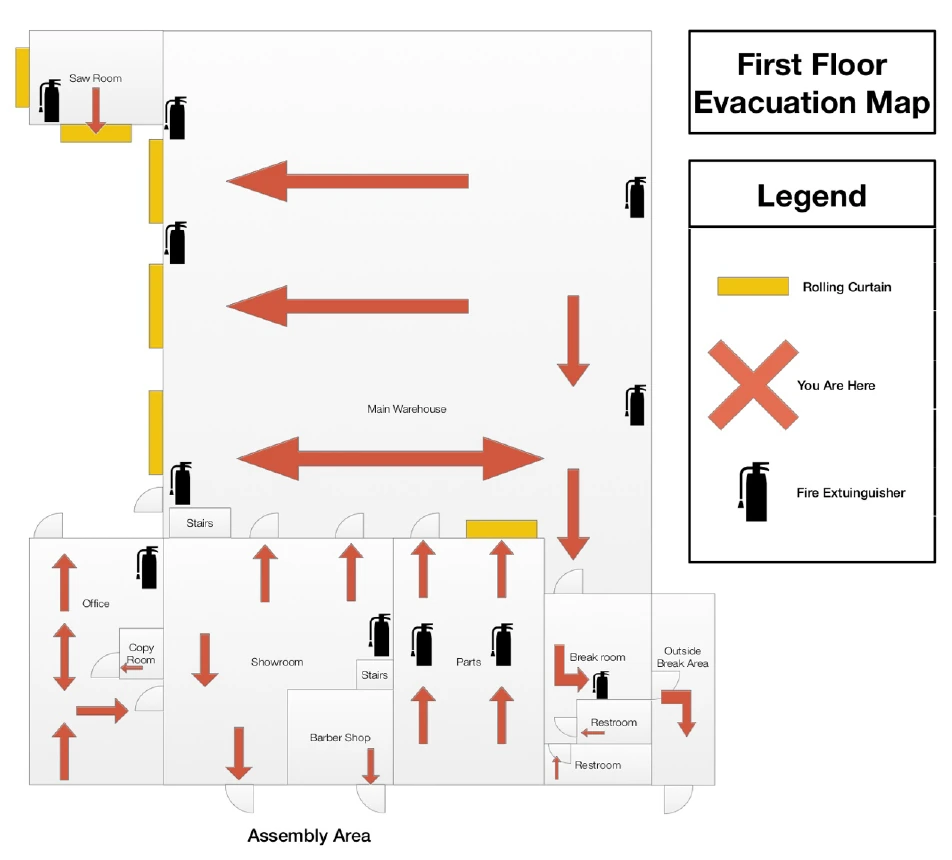
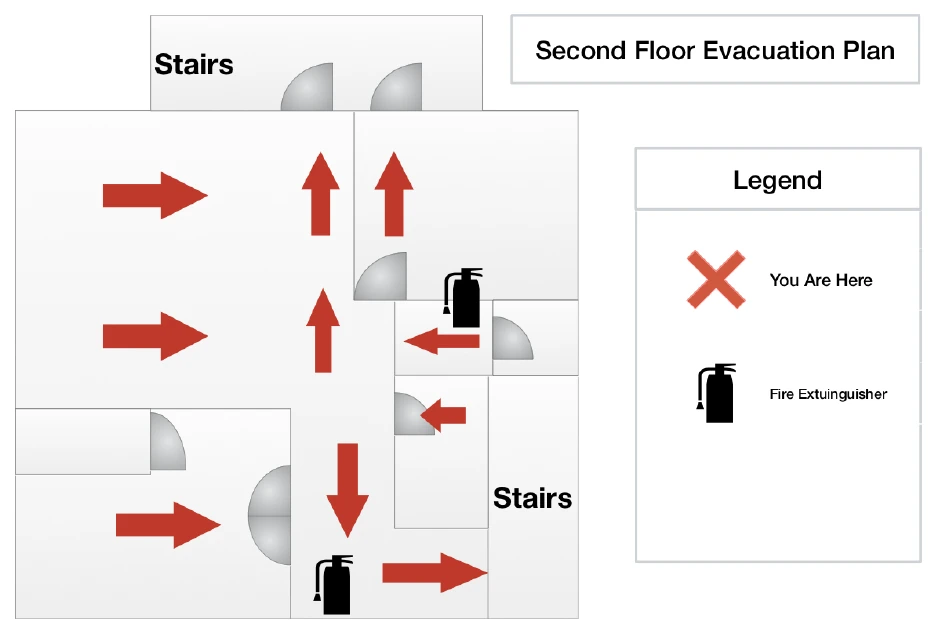
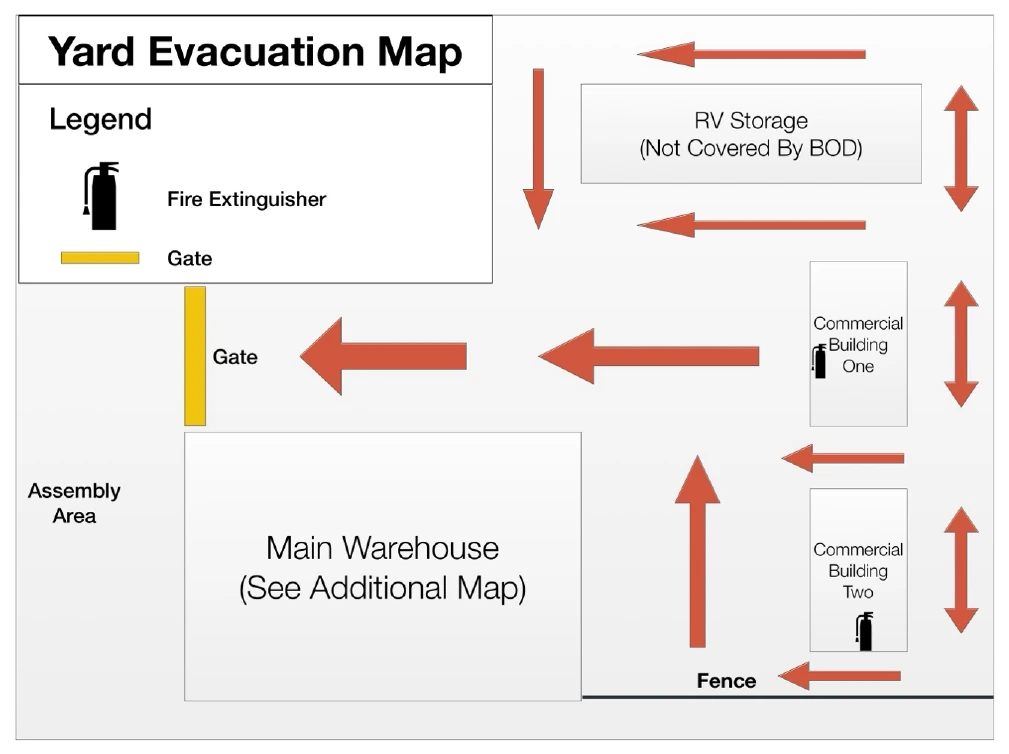
Barton evacuation maps
Use these maps to find your exits from the first floor, second floor, and yard. Check the routes against the shop’s current layout. Tap any map to see it full size.
Supervisor walkthrough
Practice these steps with your supervisor.
- Show the current chemical list and SDS book. Have an employee locate the SDS for a product they actually use.
- Read that product’s label. Identify its hazards, ventilation requirements, PPE, and spill/exposure instructions.
- Walk the primary and alternate exit routes. Include upstairs and yard routes where relevant.
- Point out the alarm device and explain the signal employees will hear.
- Walk to the front-lawn assembly area. Explain headcount, visitor reporting, and the alternate-area procedure.
- Explain who covers headcount and shutdown decisions when the primary person is absent.
- Give employees time to ask questions.
Complete your safety training
Barton Hazard Communication Program
Written program, January 2025